

Emma JM. Ates
A Contemplative Exploration of Creation
I consider myself an explorer of expressive creation and a practitioner of visual arts and contemplative photography. My approach is rooted in the formal transmissions I have received within Tibetan Mahayana Buddhism and modernist Zen, as well as in my training in Dharma Art and the contemplative arts. It participates in the ongoing transmission and translation of these practices within a contemporary Western cultural context.
I understand creation as a sensory and expressive continuation of śamatha and vipaśyanā practice. Inner attention extends through the gaze, gesture, body, and different artistic media. A work may then make perceptible a state of mind, a quality of presence, or a direct encounter with the world.
To see more: CONTEMPLATIVE CREATIVE EXPLORATION - PORTFOLIO
Early Explorations and Artistic Training in France


Artistic expression played an important role throughout my childhood. Drawing and painting offered spontaneous ways of exploring my surroundings, imagination, and inner experience.
This interest gradually deepened and eventually led me to complete a Bachelor’s degree in Visual Arts at Aix-Marseille University. During these formative years, I became particularly interested in painting and photography. I also discovered Maurice Merleau-Ponty's phenomenology, especially his reflections on perception, the lived body, and our sensory relationship with the world.
During the same period, I encountered Chögyam Trungpa’s contemplative approach through True Perception: The Path of Dharma Art. The meeting of these two perspectives profoundly influenced the way I came to understand creation as an embodied experience grounded in presence, direct perception, and the relationship between the body, the gaze, and the world.
My studies allowed me to explore a variety of media and develop the theoretical, technical, and critical foundations that have continued to support the evolution of my artistic practice.
Oil painting and clay sculpting parisian years 2000
The Evolution of My Practice Between France and Canada


Moving to Canada introduced me to a relationship with art that differed from the one I had known in France. Toronto’s cultural diversity, together with my encounters with Shambhala and the contemplative arts, gradually brought a new dimension to my creative expression and to my understanding of its purpose.
My exploration of different media, followed by my training in expressive and creative therapies and art therapy, transformed my relationship with the creative process. The medium became a partner in a more intentional exploration of the mind, body, emotions, and that which seeks to take form beyond words.
At the same time, I continued a line of inquiry inspired by Buddhist teachings and Dharma Art. This approach understands creation as a practice of presence and direct perception. It is not solely about producing or representing something, but about meeting experience fully and allowing authentic expression to emerge. Creation thus becomes a relational space between mind, sensation, gesture, material, and the world.
acrylic paint and et black ink; Collage
Dharma Art & Contemplative Arts
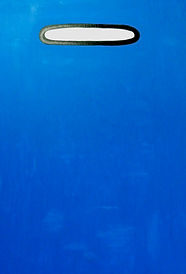

Zen Space and Traces of Mind - acrylic paint and black ink 2011 - 2026
The contemplative arts bring together practices in which creation is grounded in attention, direct perception, and embodied experience. The gaze, gesture, breath, and relationship with the medium become forms of practice in themselves. This approach does not focus solely on achieving an aesthetic result; it invites us to encounter what is present with curiosity, precision, and openness.
Dharma Art, introduced in the West by Chögyam Trungpa, extends the meditative practices of śamatha and vipaśyanā into creativity and everyday life. Artistic expression can then reveal a quality of presence and make visible the way the mind encounters the world, without immediately imposing an interpretation or preconceived intention.
I deepen this approach through Nalanda Miksang contemplative photography, Shambhala Art, and creative practices arising from Zen, including brushwork, sumi-e, and ikebana. Since 2022, my regular work with Jody Hojin Kimmel Sensei of Zen Mountain Monastery has particularly supported this meeting of meditation, sensory experience, and artistic expression.
Current Media and Areas of Exploration
My current practice continues a creative inquiry that began more than fifteen years ago and is now deepening under the guidance of Jody Hojin Kimmel Sensei. It unfolds through photography, painting, drawing, ink, and different forms of multimedia expression.
Within this approach, technical mastery and the finished object are no longer at the centre of the experience. My attention rests instead on the quality of presence, the relationship with the medium, and what reveals itself through the process. Without judging other artistic orientations, I no longer aspire to construct an identity as an artist or to place my creations within the systems of production and commercialization associated with the Western art market.
This inquiry remains a form of Buddhist-inspired contemplation and is also informed by the teachings of Thích Nhất Hạnh. It explores the possibility of simplifying, slowing down, and cultivating joy within ordinary experience, including its imperfect, changing, and vulnerable dimensions.
Through different media, I seek to make perceptible the subjective experience of an existence that is both human and profoundly earthly: our relationship with the body, emotions, the living world, and the transformations of the world we inhabit.
This personal practice directly informs my work as an art therapist and Contemplative Creative Therapist. It deepens my embodied understanding of the creative process, my capacity to remain present with uncertainty, and my attentiveness to what may emerge through gesture, material, and sensory experience, without privileging performance or aesthetic outcomes.
Partial Portfolio


